
Open-Cell Foam Insulation
Open-cell foam is the softer, lower-cost option suited for interior walls and attics where moisture resistance is less critical.
Learn moreServing Santa Maria, CA and surrounding areas. (805) 867-6950
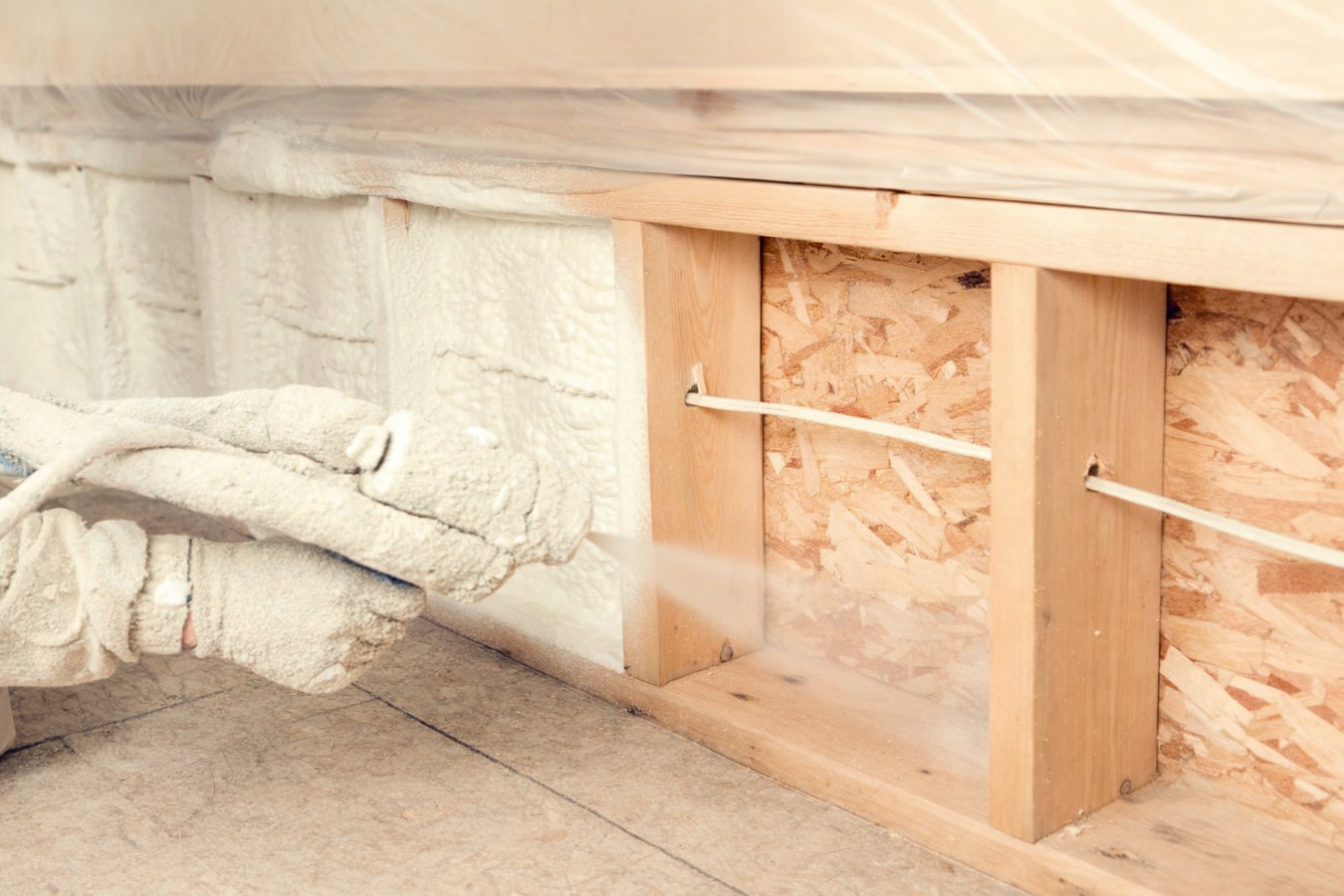
Santa Maria's coastal climate sends damp marine air into every gap it can find. Closed-cell foam seals those gaps and blocks moisture in a single application, making it the most thorough solution for exterior walls, crawl spaces, and rim joists.
Closed-cell foam insulation in Santa Maria is a two-part spray that expands on contact and hardens into a dense, rigid layer - it seals air gaps and insulates in a single pass, with most residential jobs completed in one to two days. Unlike fiberglass batts or blown-in cellulose, it acts as both an insulator and a vapor barrier, stopping moisture from working its way into wall cavities.
Santa Maria's marine climate makes closed-cell foam a particularly strong fit for this area. Coastal fog and low-level humidity are present most mornings, and older homes built before the 1980s were not sealed to anything close to today's standards. Closed-cell foam can be added to existing walls through small access holes without full demolition, which makes it practical for retrofit projects as well as new construction. If you want to understand how closed-cell compares to the softer alternative for attic and interior wall applications, our open-cell foam insulation page covers the tradeoffs in detail.
Every closed-cell foam job we do includes a written estimate, permit coordination with the City of Santa Maria or Santa Barbara County, and a walkthrough after installation so you can see the finished work before any drywall goes back up.
Santa Maria's weather is gentle enough that heating and cooling costs should be relatively modest. If your monthly utility bills seem higher than they should be for a home in this climate, poor insulation is one of the most common culprits. Heat and conditioned air escaping through walls and ceilings forces your system to run longer than it should, and you pay for every extra minute.
Santa Maria's coastal fog rolls in most mornings, and if your home's walls are not properly sealed, that moisture can find its way inside. If you notice condensation on interior surfaces, a musty smell in certain rooms, or paint that peels without an obvious cause, moisture is likely getting into your wall cavities. Closed-cell foam creates a barrier that stops this process before it leads to mold or structural damage.
If you can feel a noticeable temperature difference between rooms, or if certain spots always feel cooler than others, air is moving through gaps in your walls, attic, or floor. This is especially common in Santa Maria homes built before the 1980s, which were not built to today's air-sealing standards. A drafty room is a clear sign that conditioned air is escaping and outdoor air is getting in.
Santa Maria's agricultural surroundings mean wind-driven dust is a real presence, especially in spring and fall. If you are dusting surfaces every few days and your HVAC filters clog faster than the manufacturer suggests, fine particles are likely entering through gaps in your building envelope. Sealing those gaps with spray foam can noticeably reduce how much dust gets in.
We apply closed-cell foam to exterior walls, crawl spaces, basement walls, rim joists, roof decks, and garage ceilings. Each location has different access and thickness requirements, and we size the application to meet California's energy performance standards for Santa Maria's climate zone. In spaces where moisture is a primary concern, such as crawl spaces and exterior walls, closed-cell foam's built-in vapor control makes it the better long-term choice over batt insulation or open-cell foam.
For homes being renovated, closed-cell foam goes in before drywall is closed up, giving you a permanent insulation layer that does not sag, settle, or compress over time. For existing homes, we use the drill-and-fill method - small access holes are drilled, foam is injected to fill the cavity, and the holes are patched. Many Santa Maria homeowners in older neighborhoods have used this approach to upgrade exterior walls without a full renovation. We also pair closed-cell foam with our spray foam insulation service for attic air sealing when a whole-home approach is the goal.
California requires permits for most foam insulation projects that involve renovation work or conditioned spaces, and we handle that paperwork on every job. A permitted installation is an inspected one, and the documentation protects you when the home is sold.
Best for homes undergoing renovation where walls are open - provides the highest R-value per inch with built-in moisture control.
Ideal for Santa Maria homes with vented crawl spaces, where coastal humidity and cold floors are ongoing concerns.
Suited for older homes with raised foundations - seals one of the most common air leak points at the top of the foundation wall.
Best for existing walls in homes built before the 1980s - foam is injected through small holes and expands to fill the cavity without demolition.
Santa Maria Valley sits at the intersection of coastal marine air and active agricultural land. The fog that rolls in most mornings carries real humidity, and the wind-driven dust from surrounding fields can infiltrate any gap it finds. Closed-cell foam addresses both at once - it seals air infiltration points and creates a vapor barrier that keeps moisture vapor from crossing into wall cavities. For homes built before California's current energy standards were adopted, that two-in-one performance is difficult to match with any other insulation type.
Many homes in Santa Maria's established neighborhoods were built in the 1950s through 1970s with minimal or degraded wall insulation. Closed-cell foam can be injected into those existing walls without a full renovation, which makes it practical for the large share of Santa Maria's housing stock that falls in that age range. California's energy code sets minimum performance requirements for insulated spaces, and our installations are designed to meet those standards so they pass inspection on the first visit. We also serve homeowners in nearby Santa Barbara, Goleta, and Solvang who face the same coastal climate and similar mid-century housing stock.
The EPA publishes safety guidelines for spray polyurethane foam re-entry that govern how long homeowners must stay out after installation - you can read those directly at epa.gov. We follow those guidelines on every job and give you the specific re-entry window in writing before work begins.
We reply within one business day. We will ask about the size of your home, which areas you want insulated, and whether you have had any recent energy or moisture issues. This helps us arrive at the assessment prepared, not starting from scratch.
A contractor walks through your home, looks at the areas you want insulated, and checks for moisture damage or old insulation that should come out first. You receive a written quote that breaks down cost by area. The visit usually takes 30 to 60 minutes and costs nothing.
For most foam insulation projects in Santa Maria, a building permit is required. We handle the application for you and schedule work around the permit timeline. Processing through the City of Santa Maria's Building Division typically takes a few business days to a couple of weeks depending on current workload.
You and your family need to leave the home on installation day and stay away for at least 24 hours after the foam is applied. Once it cures, we clean up, walk you through the finished work, and schedule the city inspection. After the inspection passes, walls can be closed up and the project is complete.
Free in-home estimate. Permit handling included. No commitment required.
(805) 867-6950Santa Maria falls in California's Climate Zone 5, which has specific minimum insulation requirements under the state's energy code. We design every installation to meet those zone-specific thresholds, which means the work passes inspection on the first visit rather than requiring a redo. A contractor unfamiliar with this zone can apply the wrong thickness and create a failed inspection.
We have installed closed-cell foam in homes from Lompoc to San Luis Obispo - over 12 cities with similar coastal housing stock and climate conditions. That breadth means we know the local building departments, understand how this climate affects foam performance, and can give you grounded advice rather than generic answers.
A significant share of the work we do in Santa Maria is in homes built before 1980 - homes where the original wall insulation is nonexistent or has degraded. Our crews are experienced with the drill-and-fill retrofit method and the specific framing styles common in that era. We flag moisture or old insulation issues during the estimate so you know what the job actually involves before it starts.
The Spray Polyurethane Foam Alliance publishes installation and safety standards that govern how licensed contractors should handle foam application and re-entry windows. We follow those standards on every job. You can review the SPFA's homeowner resources at sprayfoam.org. Knowing your contractor works to a recognized industry standard matters for foam work, where shortcuts create real safety risks.
When you call us, you are talking directly to people who work in Santa Maria and understand why this specific market requires a different approach than inland California cities. Closed-cell foam performs differently in coastal climates, and our installation practices reflect that.
Open-cell foam is the softer, lower-cost option suited for interior walls and attics where moisture resistance is less critical.
Learn moreCompare all spray foam options and see how closed-cell and open-cell foam each perform in different parts of your home.
Learn moreWe are booking jobs in Santa Maria now. The sooner your walls and crawl space are sealed, the sooner that coastal moisture stops working its way in.