Home Insulation
Address your entire home's thermal envelope - attic, walls, and floors - in one coordinated project.
Learn moreServing Santa Maria, CA and surrounding areas. (805) 867-6950
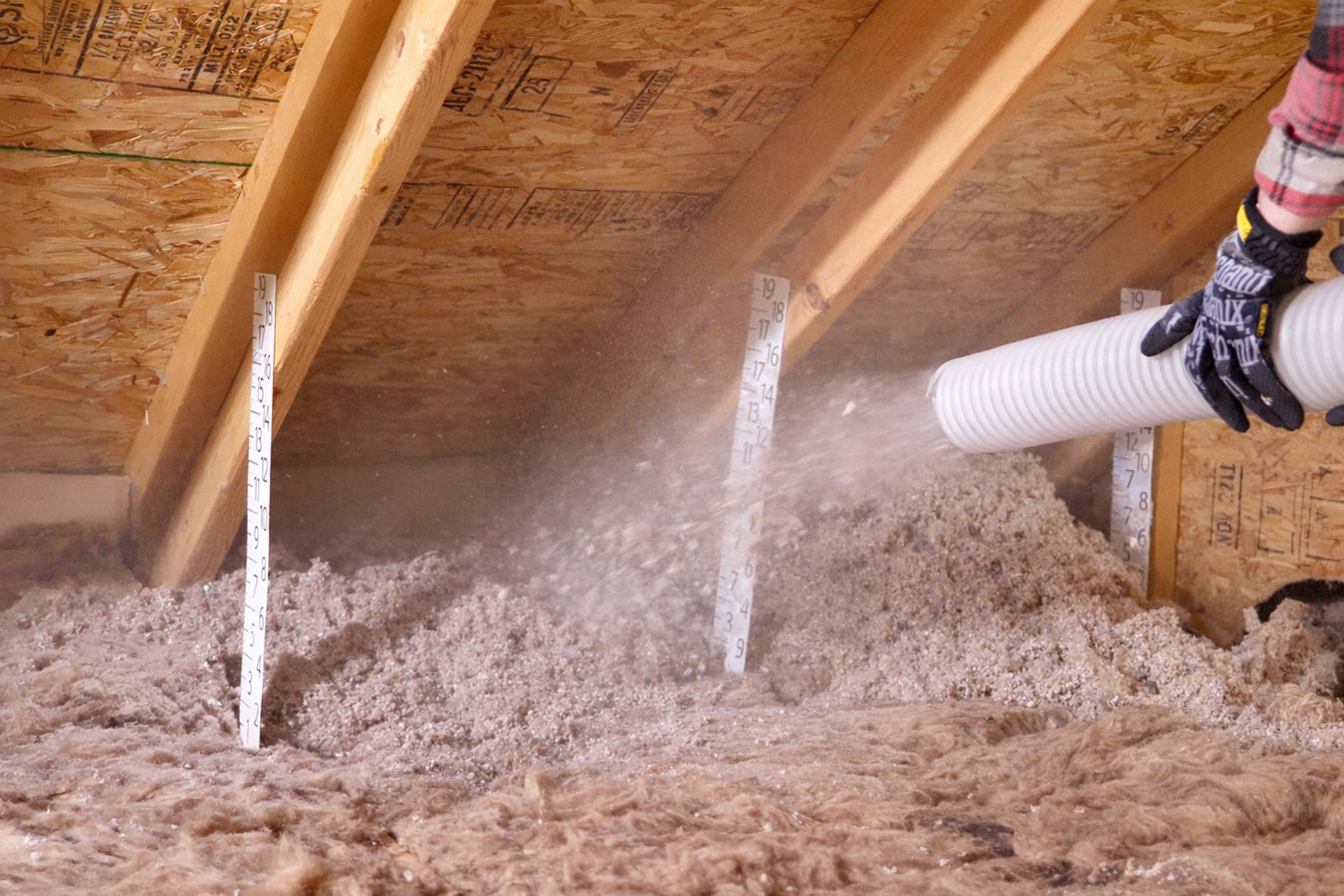
Your attic may be losing the cool night air that makes Santa Maria so comfortable. Blown-in insulation fills every corner batts miss and puts your energy bills back under control.
Blown-in insulation in Santa Maria fills your attic with loose fiber material blown in under pressure, covering gaps and reaching tight corners that standard batt insulation cannot - most attic jobs are complete in two to four hours and you can stay in your home throughout the process.
Santa Maria sits in a coastal valley where summer afternoons heat up quickly and evenings cool down just as fast. Without adequate insulation, that hard-won cool night air escapes by mid-morning. If your home was built before 1980, the attic insulation is likely far below what is recommended today. Upgrading it is one of the most cost-effective improvements available.
Many homeowners discover they also need whole-home insulation work - including walls and floors over garages - once they see how much comfort a well-sealed thermal envelope delivers.
Santa Maria evenings are famously cool, but if your home feels stuffy by mid-morning with the windows closed, the attic is likely releasing heat faster than it should. Thin or absent insulation allows that overnight cool air to escape within hours of sunrise.
Grab a flashlight and check your attic floor. If you can clearly see the wooden beams running across it, the insulation is too thin. A proper installation covers those joists completely with a deep, even layer of material.
If upstairs bedrooms are noticeably hotter in summer or colder in winter than the rest of the house, the ceiling is behaving like an outdoor surface. This is one of the clearest signs that attic insulation is not doing its job.
Santa Maria's mild climate means energy costs should be manageable. If your bill feels high for a city that rarely sees extreme temperatures, an under-insulated attic is one of the most common culprits - particularly in homes built before 1980.
Santa Maria Insulation installs both fiberglass and cellulose blown-in material in attics, wall cavities, and floors over unconditioned spaces. Before any material goes in, the crew seals air gaps around light fixtures, pipes, and framing - that step is what separates a job that actually reduces energy bills from one that just adds thickness.
If your attic has old or damaged insulation, we can handle insulation removal before adding new material. For homes where walls are also under-insulated, we pair blown-in attic work with our wall insulation service to address the full thermal envelope in a single project.
Every job targets the R-value range recommended by the Department of Energy for California's Central Coast climate zone - R-38 to R-60 in attics - so you know you are getting a result that meets current standards, not just something that looks done.
Best suited to homes with accessible attic hatches and limited existing coverage.
Ideal for older homes where exterior walls were never insulated from new construction.
Good choice for homeowners who want a material that will not settle significantly over time.
Recycled-content option that fills tight corners and irregular spaces with excellent coverage.
Santa Maria's coastal valley location creates daily temperature swings of 30 degrees or more between afternoon and evening. That constant cycle puts your home's thermal envelope to work every single day - not just in extreme weather. Homes in the neighborhoods near Allan Hancock College and around Preisker Park were mostly built between the 1950s and 1980s, and most of them have attic insulation far below what California now recommends.
Marine air from the Pacific adds a moisture consideration that inland cities do not face. Installing blown-in insulation without first checking attic ventilation can trap humidity and degrade the material over time. Every Santa Maria Insulation job includes a ventilation check before any material is installed.
We regularly serve homeowners in Lompoc, Arroyo Grande, and San Luis Obispo with the same standards we apply here at home.
We respond within 1 business day. You will be asked a few quick questions - home size, age, and what prompted the call - so the estimator arrives prepared.
A contractor visits your attic to measure existing insulation depth, check for air leaks, and assess ventilation. The estimate you receive is based on what your home actually needs.
On installation day, the crew seals gaps around fixtures and pipes before blowing a single cubic foot of material. This step takes 30 to 60 minutes and is what makes the job perform.
Before leaving, the crew measures insulation depth at multiple points and shows you the result. Drop cloths are removed, the hatch area is cleaned, and PG&E rebate documentation is provided if applicable.
We respond within 1 business day. There is no obligation - if the estimate does not make sense for your budget, you owe us nothing. After you submit, someone from our office will call to schedule a free on-site assessment at a time that works for you.
(805) 867-6950Blown-in insulation without air-sealing is like filling a leaky bucket. We seal all gaps around fixtures, pipes, and framing before any material goes in - this is what actually changes your energy bill.
Santa Maria Insulation brings years of hands-on experience to every job, and we document the work when it is done. Our crews work carefully whether the job is in your attic, your walls, or your crawl space.
We have completed blown-in, spray foam, and air-sealing projects across Santa Maria, San Luis Obispo County, and Santa Barbara County. Local experience means we understand the housing stock and the climate here.
We are familiar with PG&E's current rebate programs and handle the documentation on your behalf. You do not need to track down forms or make calls to figure out what you qualify for. See the{' '}U.S. Department of Energy's insulation guide for background on what upgrades typically qualify.
The combination of air-sealing, proper material depth, and ventilation review is what separates our work from a contractor who simply blows material in and leaves. If you want to verify best practices before you hire anyone, the U.S. Department of Energy insulation guide is a reliable starting point.
Address your entire home's thermal envelope - attic, walls, and floors - in one coordinated project.
Learn moreOlder Santa Maria homes often lack wall insulation entirely; adding it dramatically reduces drafts and hot spots.
Learn moreCrews are available throughout Santa Maria and the Central Coast - schedule your assessment now before the summer heat hits.